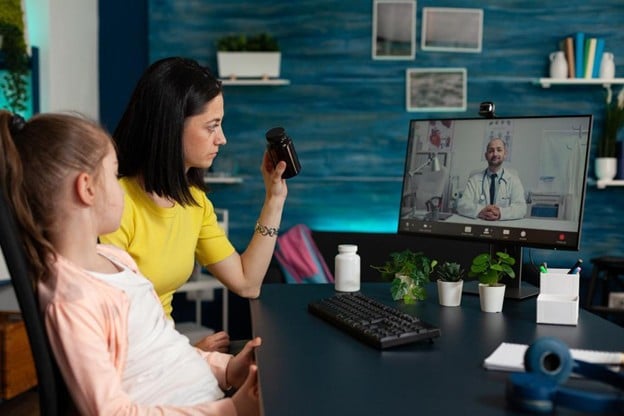
For Pennsylvania residents managing chronic pain, PTSD, anxiety, or any of the state’s other qualifying conditions, getting a medical marijuana card no longer means a clinic waiting room. The Pennsylvania Department of Health first permitted licensed physicians to certify patients via telehealth in March 2020, under the COVID-era Proclamation of Disaster Emergency, and the authorization has remained in place since. Many Philadelphia patients now skip the in-person visit entirely. The convenience is real. But the shift has also created confusion about which online providers are legitimate and which are operating in a gray zone. Here is what a real Pennsylvania telehealth evaluation actually looks like, and what to verify before booking one.
The mechanics are simpler than most patients expect. A Pennsylvania-licensed physician conducts a 10 to 15 minute video or phone consultation, reviews the patient’s qualifying condition and relevant history, and (if the patient is approved) enters the certification directly into the PA Patient Registry. The process for obtaining a PA cannabis card via telehealth is the same as the original in-person workflow, just remote. The Department of Health has continued the telehealth authorization through its administrative regulations, and as of early 2026 state legislators have been working to codify it permanently into the Medical Marijuana Act.
What the convenience hides, though, is the credential question. Not every online “cannabis doctor” is actually authorized to certify Pennsylvania patients. The PA DOH maintains a publicly available Approved Practitioner registry, and only providers listed there can submit certifications to the state. Reputable services such as MMJ.com connect patients with Pennsylvania cannabis doctors online who are both licensed in the state and registered with the DOH program. Some out-of-state operators market themselves to Pennsylvania residents while using providers who can’t actually enter certifications into the state registry. The result: the patient pays, receives a document that means nothing at a Pennsylvania dispensary, and has no recourse.
Pennsylvania has unusually strict rules on who can certify. Under 28 Pa. Code Chapter 1181A (Physicians and Practitioners), only Medical Doctors (MD) and Doctors of Osteopathic Medicine (DO) licensed by the Pennsylvania State Board of Medicine or the State Board of Osteopathic Medicine are eligible. Nurse practitioners, physician assistants, naturopaths, and chiropractors are not authorized to certify patients for medical marijuana in Pennsylvania, regardless of how a service describes them. Approved practitioners must also complete a four-hour Department of Health-approved training course, as required by 28 Pa. Code § 1181a.32, before they can register. If a provider’s website doesn’t make their physicians’ MD/DO status and Pennsylvania license numbers easy to find, that is the first red flag.
A legitimate evaluation isn’t perfunctory, but it isn’t invasive either. The doctor verifies the patient’s identity against a Pennsylvania driver’s license or state ID, confirms residency, reviews the qualifying condition and prior treatments, asks about symptom severity and how the condition affects daily life, and walks through how medical cannabis might fit into a broader care plan. There is no physical exam component for telehealth visits, since the certification is based on documented history rather than acute findings. Medical records help support the case, especially for conditions like PTSD or chronic pain, but they are not strictly required. Pennsylvania physicians are permitted to certify based on clinical judgment during the consultation.
Before booking, patients can do a few minutes of verification that will save real trouble later. Look up the physician’s name in PALS (the Pennsylvania Licensing System) at pals.pa.gov, which is the Department of State’s verification portal covering both the State Board of Medicine and the State Board of Osteopathic Medicine. Confirm the physician also appears in the PA Department of Health’s Approved Practitioner registry (the state publishes the list as a downloadable PDF, organized by county). Make sure the service commits to entering the certification directly into the state Patient Registry rather than handing over a paper document. And confirm the provider offers a money-back guarantee if the patient does not qualify, which most established services do.
A few things should immediately concern a patient. Any provider unable to produce a Pennsylvania license number on demand, services that bill themselves as “naturopathic” or “alternative medicine” certification, language promising “guaranteed approval” before the visit (no legitimate physician can promise certification before reviewing a patient’s history), high-pressure sales tactics around specific products or dispensaries, and fee structures that bundle the state’s $50 registration into the evaluation cost without actually applying it to the DOH are all signs to look elsewhere.
Once the physician submits the certification, the patient completes their state registration on the PA DOH portal at padohmmp.custhelp.com and pays the $50 fee. That fee is waived to $0 for patients enrolled in Medicaid, PACE/PACENET, CHIP, SNAP, or WIC under the state’s Medical Marijuana Assistance Program. Pennsylvania does not yet issue digital cards, so a physical card arrives by mail within one to three weeks. Once it arrives, it is valid at any state-licensed dispensary and remains active for one year before renewal.
The wider point is straightforward. Verifying a doctor’s Pennsylvania credentials takes about two minutes, and it protects the patient from a category of online services that exist specifically to take advantage of the convenience of telehealth without the underlying authority to deliver on it. For a process that ends with a year of legal medical registration and access to a regulated dispensary network, that is the most valuable two minutes in the entire process.